

Article by Cllr Dick Cole published in the Cornish Guardian newspaper (6th March 2024)
The Convention for the Safeguarding of Intangible Cultural Heritage was adopted by the United Nations Educational, Scientific and Cultural Organisation (UNESCO) in 2003. The list of states which have ratified the treaty numbers more than 180, and that now includes the United Kingdom.
Intangible cultural heritage is defined as “practices, representations, expressions, knowledge and know-how transmitted from generation to generation within communities.” The Convention has five indicative categories: (a) oral traditions and expressions, (b) performing arts,(c) social practices, rituals and festive events, (d) knowledge and practices concerning nature and the universe, and (e) traditional craftsmanship.
In terms of the UK implementation of the treaty, the Department for Culture, Media and Sport (DCMS) has been carrying out a consultation. As part of this, the UK Government is considering adding a further two categories: (f) traditional games and sport, and (g) culinary traditions.
The concept of “safeguarding,” integral to the document, links to “raising awareness, building participation, ensuring sustainability, and supporting the passing on of skills and knowledge.”
The Government’s initial plan is to “establish a UK inventory of intangible cultural heritage as required by Article 12 of the Convention,” which will be done by “representatives of the four UK nations and any of the Crown Dependencies or overseas territories which choose to participate.” It is also committed to “approval panels for each of the four UK nations” to will decide whether to include an item on the inventory.
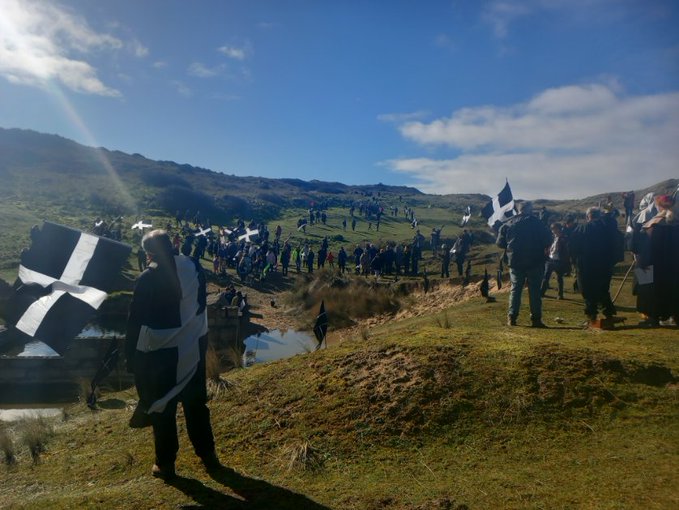
It will surprise no-one that I fully welcome greater support and recognition for intangible cultural heritage, and I am writing this column having just returned from celebrating Cornwall’s national saint’s day at St Piran’s Oratory on Gear Sands.
But I am so disappointed that the UK Government, in its approach to the treaty, is not seeking to treat Cornwall as a national entity.
Having recognised the Cornish as a national minority in 2014, affording us the “same status … as the UK’s other Celtic people, the Scots, the Welsh and the Irish,” surely that parity needs to be appropriately reflected in what the DCMS does now.
I think it would be nonsensical for the UK Government to fail to meet its obligations to the Framework Convention for the Protection of National Minorities, while dealing with the Convention relating to intangible cultural heritage. I have written to the DCMS consultation requesting a “national panel” / “approval panel” for Cornwall and I know Cornwall Council has done the same.